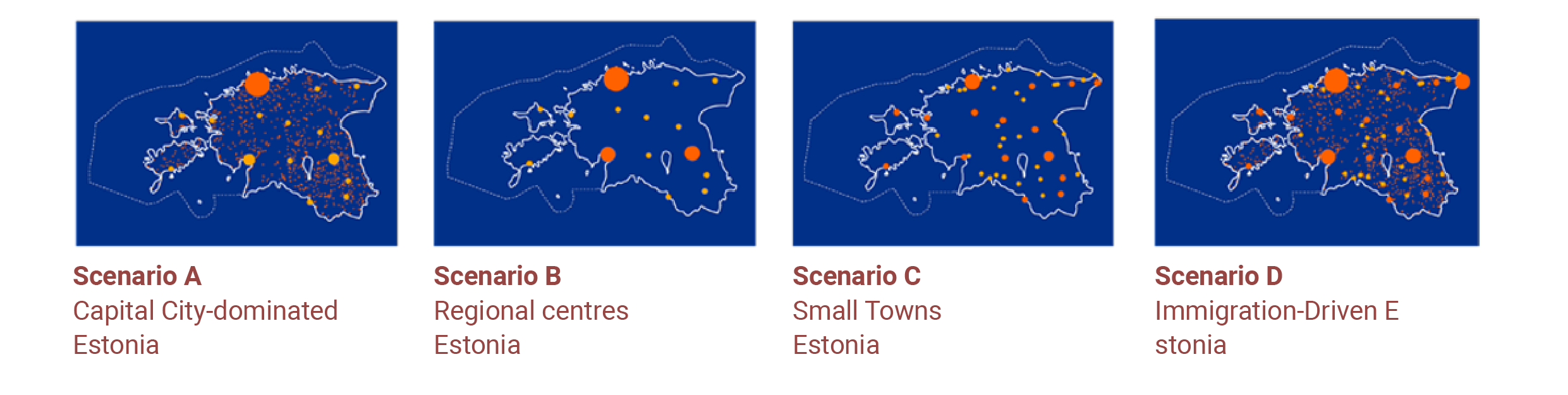
The study of spatial development scenarios provides a science-based evidence for the National spatial plan of Estonia. The aim of the national spatial plan is to determine the principles, guidelines and trends for the country’s balanced regional development until 2050. The study focuses on analyzing four pre-defined scenarios for the Estonian spatial development, addressing demographic change, resource needs and environmental impacts of different scenarios. Together, these scenarios provide insight into the level of effort needed to pursue alternative spatial development paths in response to the long-standing concentration of population and economic activity in the capital region. The analyzed scenarios are as follows (Figure 1):
- Capital City-dominated Estonia People and jobs continue to concentrate in the capital region, while depopulation and decrease in economic activity take place in the rest of the country.
- Regional Centres Estonia People and jobs concentrate not only in Tallinn but also in the regional centres of Tartu, Pärnu, and the Ida-Viru city-region.
- Small Towns Estonia The focus is on job creation and improvement of the living conditions in county centres and other small towns located all over Estonia.
- Immigration-Driven Estonia Estonia’s overall attractiveness and growing labour demand increase immigration, supporting population growth mainly in the capital region and major regional centres, but other areas of the country also benefit from it.
The key messages of the study are as follows:
Message 1
Balanced spatial development is ensured by at least ten economically strong and evenly distributed engine cities across Estonia.
Estonia 2035 sets the goal of balanced spatial development in Estonia, aiming that the population share of Harju (hosts capital city Tallinn) and Tartu counties does not increase. However, Estonia’s current spatial development is characterized by the continued concentration of people and jobs from other parts of the country into Tallinn and its surrounding municipalities. This concentration in the capital city region does not only increase spatial divides but has long-term negative impacts on demographic and economic development. For example, the birth rate in both Tallinn and its surrounding municipalities is significantly lower than in other parts of Estonia, which means that population concentration in the capital region exacerbates already acute demographic and labour shortage related problems in the country. This also increases the need to recruit increasing number of foreign workers.
To ensure more balanced spatial development, it is important to act as soon as possible. The more people and jobs concentrate in the capital city region, the more difficult it will be to ensure the demographic and economic sustainability of other regions of Estonia due to the cumulation of disadvantage over time. A population project conducted up to 2050 shows that even in the “Small towns Estonia” scenario — which assumes domestic migration from the Tallinn city region to the rest of the country — the share of the capital region in Estonia’s population continues to grow. This is due to the fact that the population in most Estonian cities and rural municipalities is older, and migration alone can no longer fully offset the natural population decline. The concentration of jobs in Tallinn is even more pronounced than the concentration of people. People commute to the capital not only from the surrounding Harju County but also from central parts of central Estonia, and both the intensity of commuting the nearby municipalities and the spatial reach of the commuting field grows with time. In addition to Tallinn, only regional centres and larger county centres can offer enough jobs for both local residents and surrounding areas. Therefore, if people in Estonia would live where the jobs are located, the level of the concentration of people in the capital city regions would be even higher.
However, our study shows that a significant share of young people would prefer to live in a variety of living environments across Estonia, including rural areas. A more even development of Estonian settlement than today’s can thus be ensured if young people are able to realize their residential and worklife preferences. For example, young people particularly value flexible and hybrid work arrangements and are generally willing to commute up to approximately 30 minutes to the nearest city or town.
Movements related to services tend to be even more local in nature compared to work-related commuting and mostly remain within county boundaries. While city planning globally is increasingly based on the idea of the 15-minute walking city, Estonia’s balanced spatial development could be supported by a strategic goal that jobs, schools, and other essential services should ideally be located within approximately a half an hour travel distance.
While city planning globally is increasingly based on the idea of the 15-minute walking city, Estonia’s balanced spatial development could be supported by a strategic goal that jobs, schools, and other essential services should ideally be located within approximately a half an hour travel distance.
By summarizing the four spatial development scenarios, we find that the best path for the national economy is if, alongside the capital region, the regional centres of Tartu, Pärnu, and Ida-Virumaa make a significant contribution to Estonia’s economic competitiveness. The best outcomes for environmental sustainability and for the socially inclusive development is provided by the small towns scenario. By preserving the compact spatial form of small towns, and by curbing the continued concentration of people and jobs to the capital city region, society could save approximately €6 billion over the next 25 years or by 2050. In case of the continued capital city dominance scenario, this amount would be spent on the construction of new (including public) buildings and infrastructure in the Tallinn region, and on the demolition of buildings falling out of use in other parts of Estonia.
A more balanced development of settlement than before is supported by an even clearer regional division of roles than previously. In other words, it is necessary to define the key cities that are driving the spatially balanced development in all Estonia — engine cities. This would entail facilitating the existing strengths of these cities base on todays needs, both when it comes to jobs as well as provision of a good mix of services, including higher order services such as tertiary level educational institutions, higher order healthcare facilities or professional theatres, so that most parts of Estonia would have access to jobs and services within a reasonable timeframe.
Such balanced spatial development can be ensured by at least ten economically strong engine cities that are capable of offering jobs and higher-level services not only to their own residents but also to those of surrounding areas (Figure 2). These cities can be divided into three groups according to their capacity to provide employment and services:
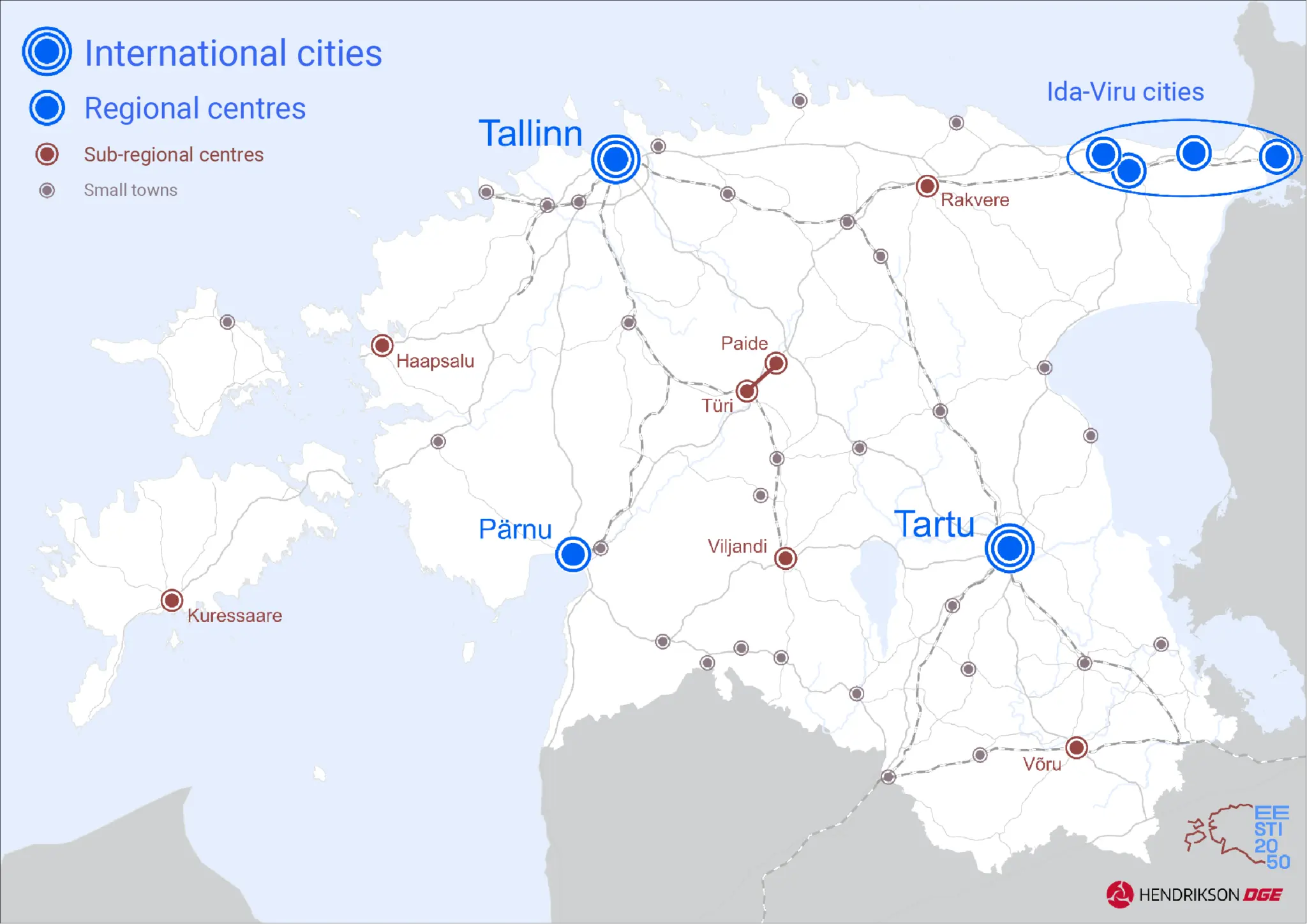
- Cities of international importance: Tallinn and Tartu, which fulfil nationwide functions covering all of Estonia, including research and development, innovation and industrial advancement, public services, international connectivity, cultural life, and networks of education, healthcare, and other essential services.
- Cities of national importance: Pärnu and the Ida-Virumaa urban area, whose functional influence remains largely within county boundaries, but which take on the role of national-level drivers in some economic niches (e.g., industry in Ida-Viru, renewable energy, logistics and welfare economy in Pärnu) in addition to general functions of regional centres as providers of jobs and diverse set of services to their regions, and attractive living environment for their residents.
- Cities of regional imortance: Viljandi, Rakvere, Võru, Kuressaare, Paide-Türi, and Haapsalu — cities that provide jobs and services locally, that is not beyond the respective county-borders where they are located. Often, particularly in more distant parts of the county where they are located, these cities compete with regional or international centres. However, to achieve more balanced spatial development, it is essential to strengthen these centres as providers of jobs, services and attractive urban environments. For economic viability, this implies the need to develop entrepreneurship and innovation hubs, provision of a variety of jobs, and higher-level services — including education (e.g. universities), higher-order health-care services (hospitals), and cultural activities (e.g. theatres, sports halls).
About 93% of all residents of Estonia and approximately 9/10 of Estonia’s territory are covered by the commuting field of engine cities. Not all county centres of the 15 counties of Estonia are not classified as engine cities. Still, they retain their important role as administrative centres, ensuring access to public services through government service centers established in them. They provide also various higher level services, and act as as centers for county level as well as more local level cooperation in case of smaller towns. However, their impact on surrounding areas in terms of commuting is smaller compared to the engine cities.
The primary role of small towns, both country centres not listed as engine cities, but also other small towns with less important administrative functions, is to offer to residents a high-quality living environment and locally accessible basic services, including primary- and secondary-level schools. The effective functioning of families and businesses in small towns is assumed to depend on their close connection to at least one engine city — a connection that must be ensured through good transportation links. Efficient public transport can be sustained only when small towns keep their compact form. In dispersed settlements, private cars remain an main travel mode. Although the development of industry and export-oriented service sectors may complement these settlements’ roles in people’s daily lives, in general they primarily provide employment in the public sector, in agriculture and forestry, and in the consumption economy (including tourism-related jobs).
Message 2
The most sustainable path for development is offered by spatially compact settlements, which help ensure better connectivity with the engine cities and thus improve access to both jobs and higher-order services in most of Estonia.
The results of our population projections indicate that even under the “Small Towns Estonia” scenario that assumes a domestic migration turnaround in Estonia from the capital city region to the rest of the country, depopulation will continue in them, only at smaller pace. The reason for continued population shrinkage even when in-migration takes places relates to the old age structure of the existing population, contributing to high levels of natural population decline. Likewise, it is not realitic to disperse jobs across Estonia to match the extent of population dispersal. Hence. Commuting is an unavoidable reality, but it can be reduced by remote and hybrid work arrangements that are most favoured among the younger generations. For example, the commuting flow to Tallinn increased significantly during 2011–2021: the capital’s employment area covers 31% of Estonia’s territory and is home to approximately 700,000 people. The ten engine cities have sufficient jobs, both for their own residents and for people living elsewhere. Strengthening connections between small towns and engine cities, also by means of public transport, would thus be one of the key preconditions to achieve a more balanced spatial development.
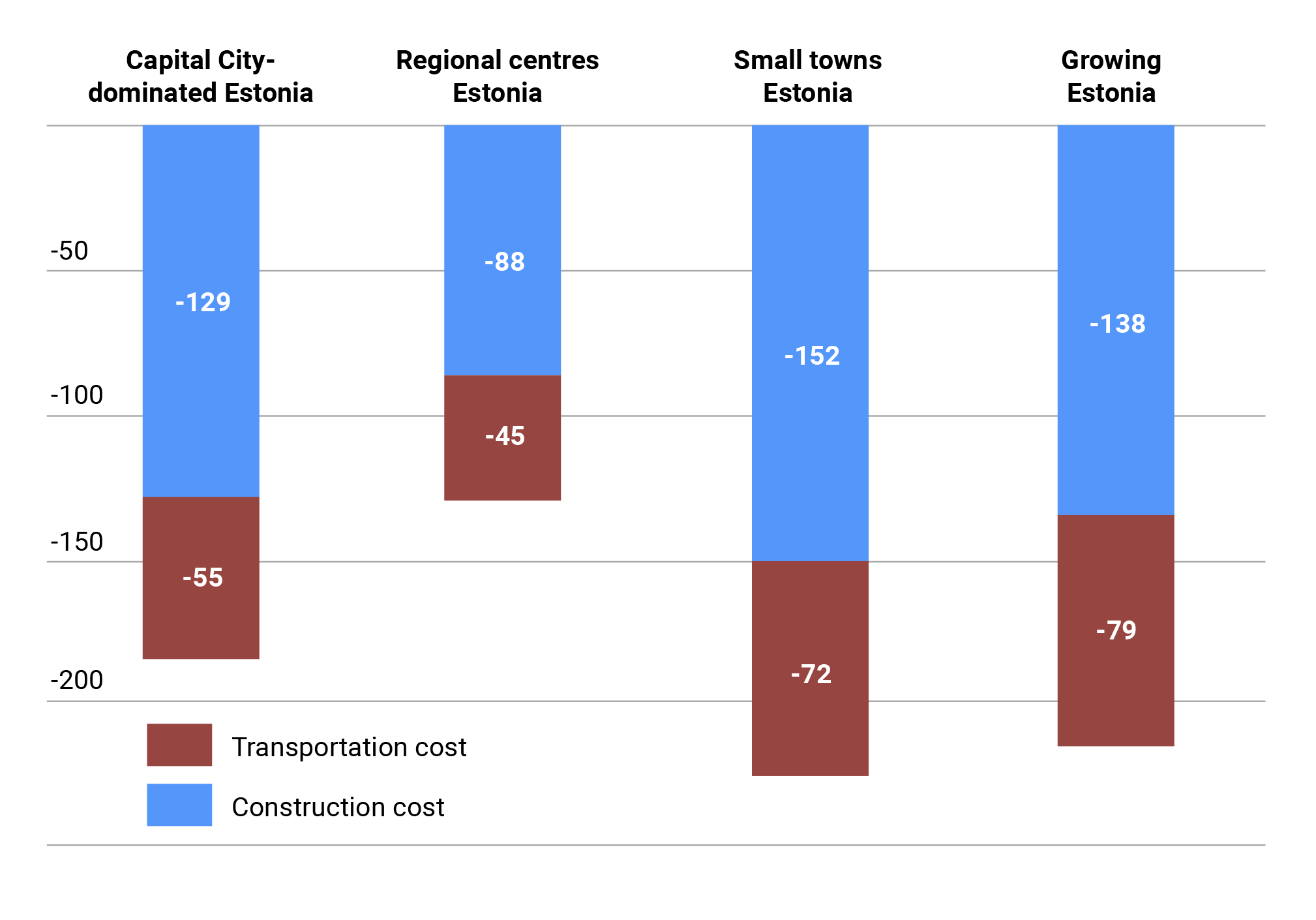
For small towns that are facing continued shrinkage, it is therefore essential to focus on spatial compactness in planning them. For example, emptying apartments should be demolished from more remote locations not in central parts of the towns. Compact form helps to ensure both better connectivity with the engine cities as well as easier provision of local services—thus also reducing both energy consumption for commuting and the overall environmental footprint. Moreover, more compact small towns allows for more effective maintenance of critical infrastructure such as stable electricity and internet connections and well-kept roads under the conditions of a declining population. Equally important is improving the quality of the living environment in depopulating small towns through measures such as retrofitting the buildings that are not subject to demolishing, and investing into attractive public spaces. This, in turn, helps to reduces outmigration, supports the return of people who have left them for education, and ultimately reduces the need to demolish existing residential buildings. By limiting suburban sprawl around Tallinn and around the regional centers, society could save significantly on construction costs. Overall, a more uniform settlement development across Estonia would help save approximately 100–150 million euros per year in construction and demolition costs, along with 50–80 million euros per year in reduced commuting expenses (Figure 3). Additionally, by reducing the clustering of people and jobs in Tallinn, and by maintaining more compact small towns declining regions, the volume of buildings falling out of use decreases. For example, in the case of the compact Small Town scenario, up to 3.5 billion euros worth by 2050.
To ensure internal compactness within urban areas, it is important to limit urban sprawl with setting dedicated threshold numbers, for example, so that the number of suburban residents would not exceed 120% of the current level by 2050. The pressure of urban sprawl can also be reduced by supporting more balanced spatial development. On the one hand, this can be achieved through the developing the economic potential of at least ten major cities, and the resulting job creation that it would bring along. On the other hand, this aim can be achieved by supporting the return migration of young people after completing their tertiary education in the major cities. Our research shows that young people are willing to live more evenly across Estonia in the future compared to their current places of residence. Moving to larger cities, mainly Tallinn and Tartu, for education is a logical step in terms of both individual development and the country’s economic growth. However, the most effective way to achieve balanced spatial development objectives is to support the young people’s post-graduation preferences to live in less urban environments, including in rural areas.
Continuing urban sprawl — albeit at a significantly more moderate pace — is, to some extent, justified by the volume of building permits already granted in suburban areas. Reversing these would be legally complex, risks violating property owners’ sense of justice, and potentially place a financial burden on the public sector if legal risks realize and compensation has to be paid to landlords unable to proceed with their plans. At the same time, a certain degree of continued suburbanization is supported by young people’s residential preferences for a more suburban lifestyle and environment. Around the engine cities, the development of compact small-town-like centers should be supported to mitigate the negative impacts of sprawl in the form of increased commuting. In other words, suburban expansion should come along with strengthening the role of suburban towns as centres of employment and services, based on jobs follow-the-people approach in contrast to the people-follow-the job approach prevailing regional policy. The strengthening the suburban centers also requires maintaining or moderately increasing their population. Near Tallinn and Tartu, there are already several suburban centers—such as Keila and Maardu, or Elva and Otepää—that serve as important local service hubs.
Message 3
Both growing and shrinking settlements require spatial interventions that support their compact development and the creation of a high-quality living environment.
In addition to the nationwide spatial development goals, steering development onto a sustainable path also requires thoughtful, place-based spatial planning for each settlement. From the perspective of sustainable development, the most important goal is to increase the compactness of both growing and shrinking settlements. To simplify this task, planning could be structured on around 25 functional and form-based settlement types derived from the historical evolution of Estonian settlements.
When guiding these settlement types toward more compact forms, one can (a) rely on various density indicators such as population density, housing density, plot coverage, and land-use intensity, and (b) link these density indicators to the accessibility of jobs and services within a reasonable timeframe throughout the country. A study of young people indicates that, perceptually, a reasonable travel time to work or services is about 30 minutes. Public transport plays a key role in travel between engine cities and in connecting compactly settled areas to engine cities. In more remote, sparsely populated areas, car use remains inevitable. Within cities, it is essential to continue supporting active modes of transport, such as walking and cycling.
In spatial planning for settlements, beyond considering resource use and environmental impact, creating a high-quality living environment is essential. High-quality space does not merely mean meeting minimum requirements — it also encompasses various factors such as sustainability, aesthetic, cultural, functional, and social values. Although spatial quality is a complex concept that is difficult to measure in quantitative terms, its overall aim is simple and clear: whether constructing new buildings, demolishing old ones, or renovating existing houses, it is equally important to prioritize the everyday experience of the living environment of people so that they feel good in where they live.
The youth survey also shows that all values related to the living environment are very important to them. Attractive and high-quality living environment helps prevent outmigration and supports return migration, indirectly benefiting local entrepreneurship by ensuring that there is a sufficient population to sustain service provision. Even a temporary population increase during the summer period can be a crucial lifeline for local businesses in otherwise shrinking areas. A high-quality living environment helps build stronger local communities all across Estonia, which ultimately also has a positive impact on Estonia’s security. Therefore, when making decisions, it is important to consider the criteria for quality space as broadly as possible.
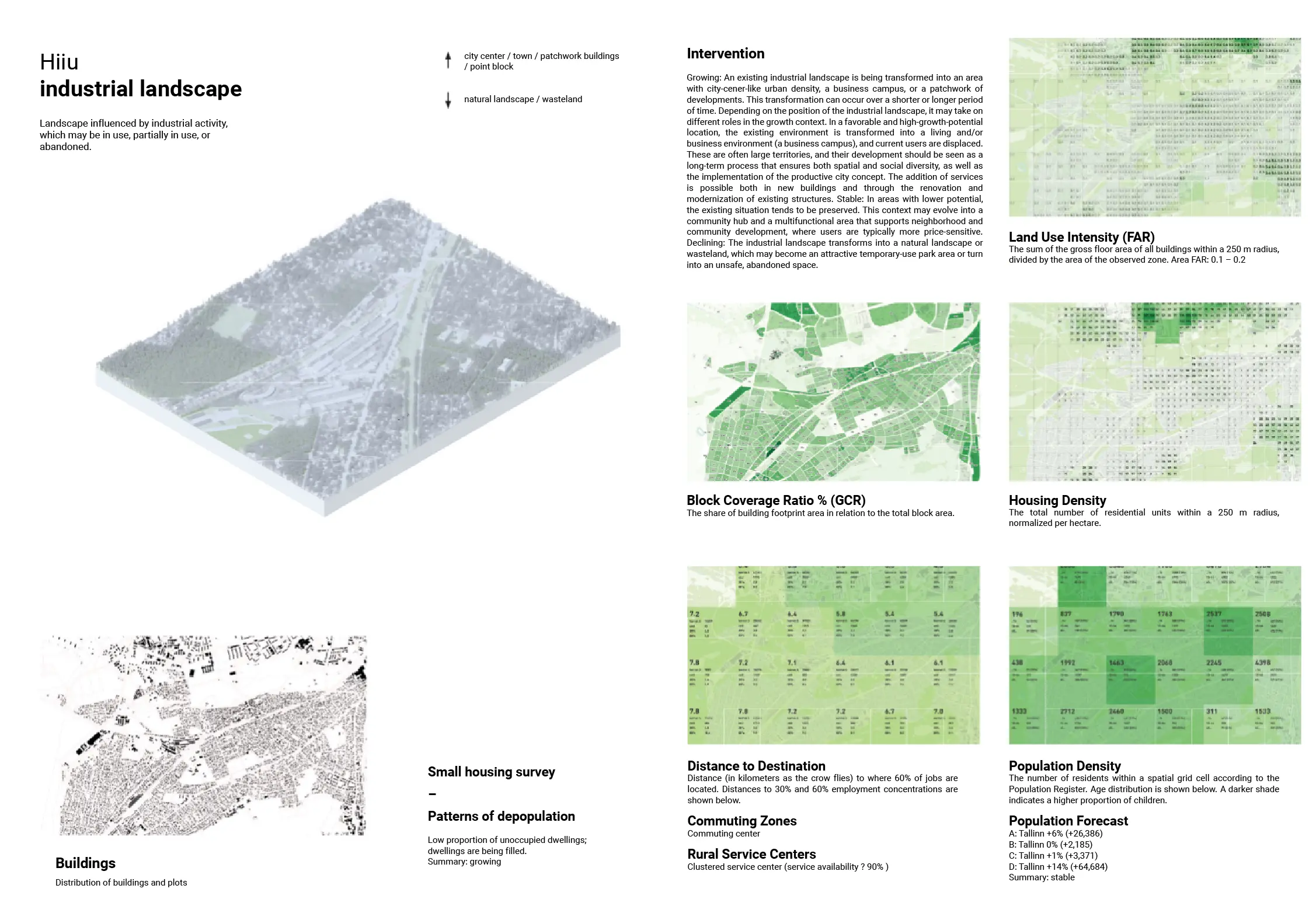
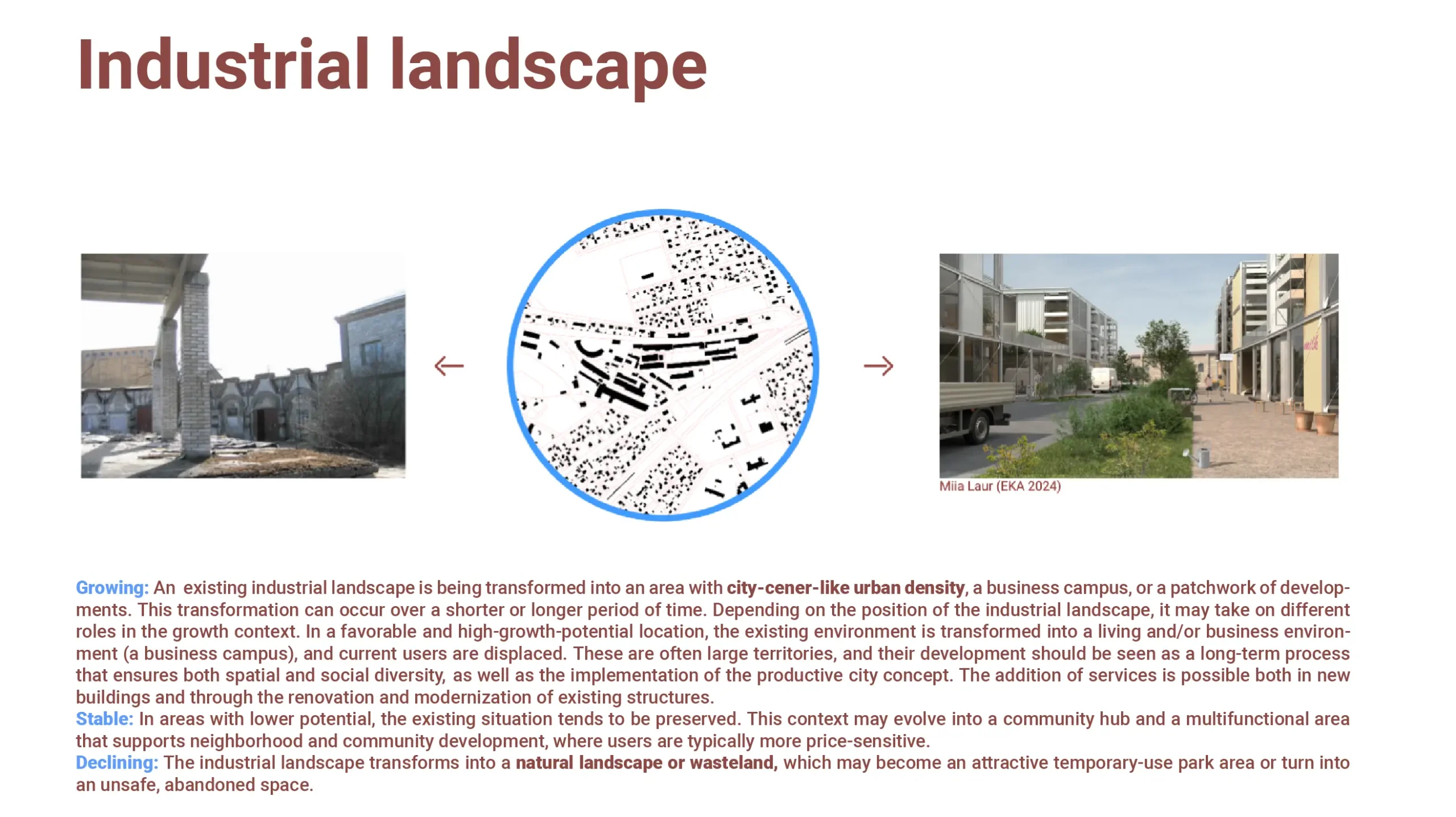
Photo: M. Laur (4th-year specialty studio concept project, Architecture and Urban Planning, Estonian Academy of Arts, 2024)..
The definition and creation of quality space could be based on three key documents that provide the core content for this concept:
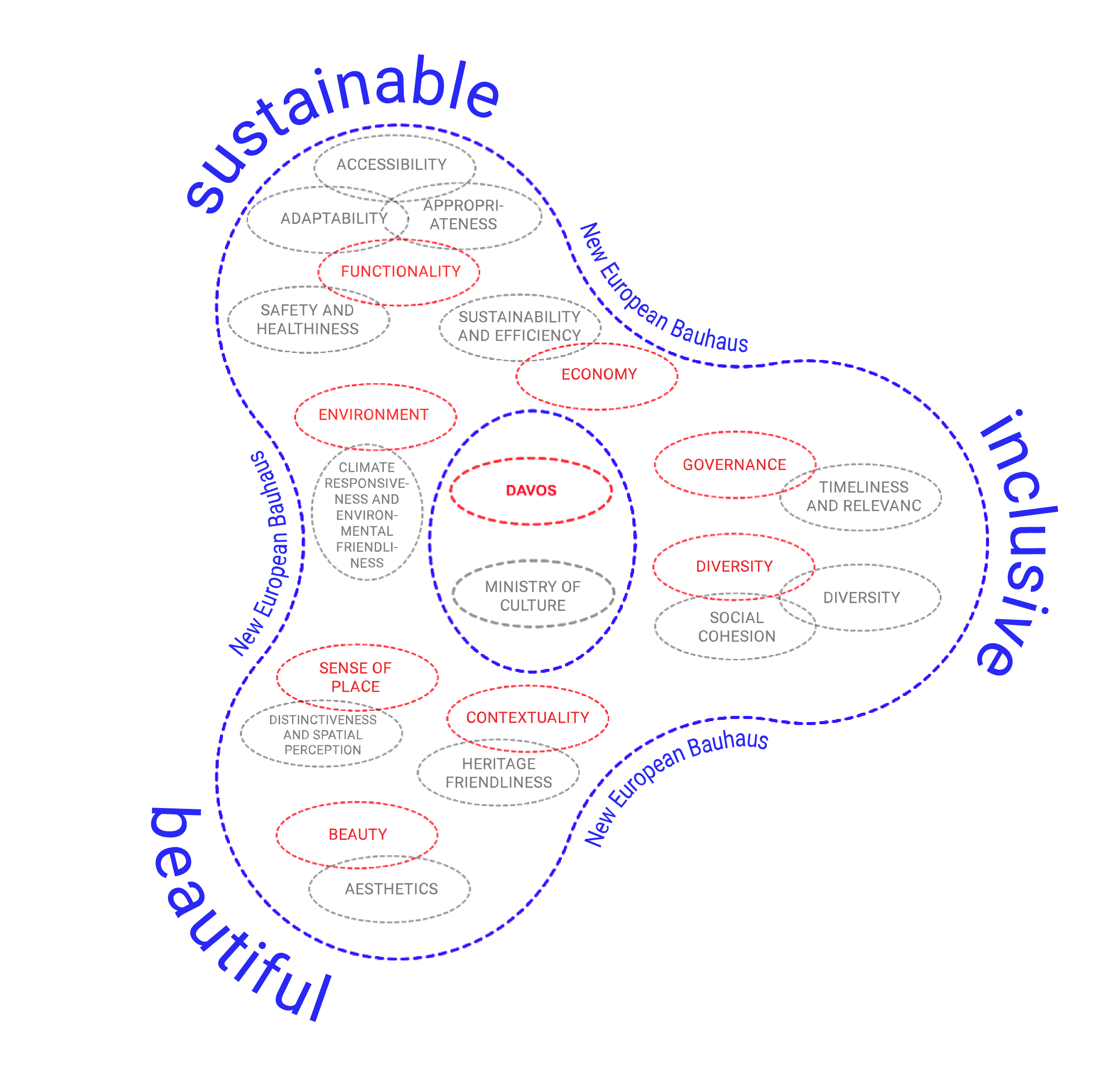
- The Davos Declaration1, signed by European ministers of culture on January 22, 2018, and the subsequent expert group report. The report outlines eight core criteria for the attractive and high-quality space: governance, functionality, environment, economy, diversity, contextuality, sense of place, and beauty. (Source: Towards a Shared Culture of Architecture. Investing in a High-Quality Living Environment for Everyone, EU Member State Expert Group Report, 2021).
- The Ministry of Culture’s Principles of Quality Space (Final Report of the Spatial Design Working Group, Annex 3: Principles of Quality Space, Nov. 2019). Compared to the Davos Declaration, this document treats functionality more broadly, including suitability, adaptability, accessibility, safety, and health. Governance is defined in terms of timeliness and relevance, and social cohesion is specifically emphasized under diversity.
- The New European Bauhaus initiative2, which defines a triad of values: beautiful, inclusive, and sustainable. Without these values, the European Green Deal would lack essential content and quality.
Based on the principles set out in these foundational documents (figure 6), any demolition or addition of buildings must be carefully considered in advance—whether existing buildings could be retrofitted following these quality principles and reused instead, thus avoiding the need for new construction.